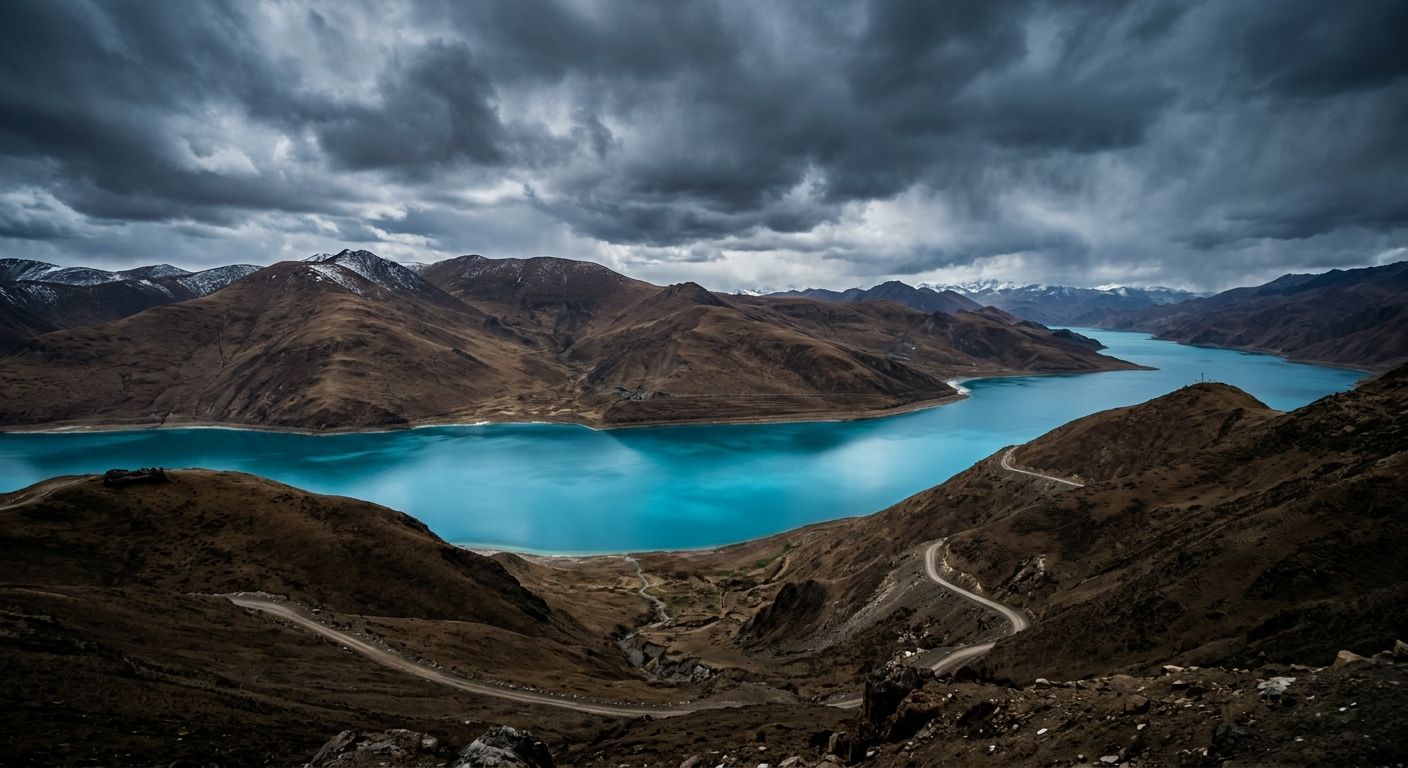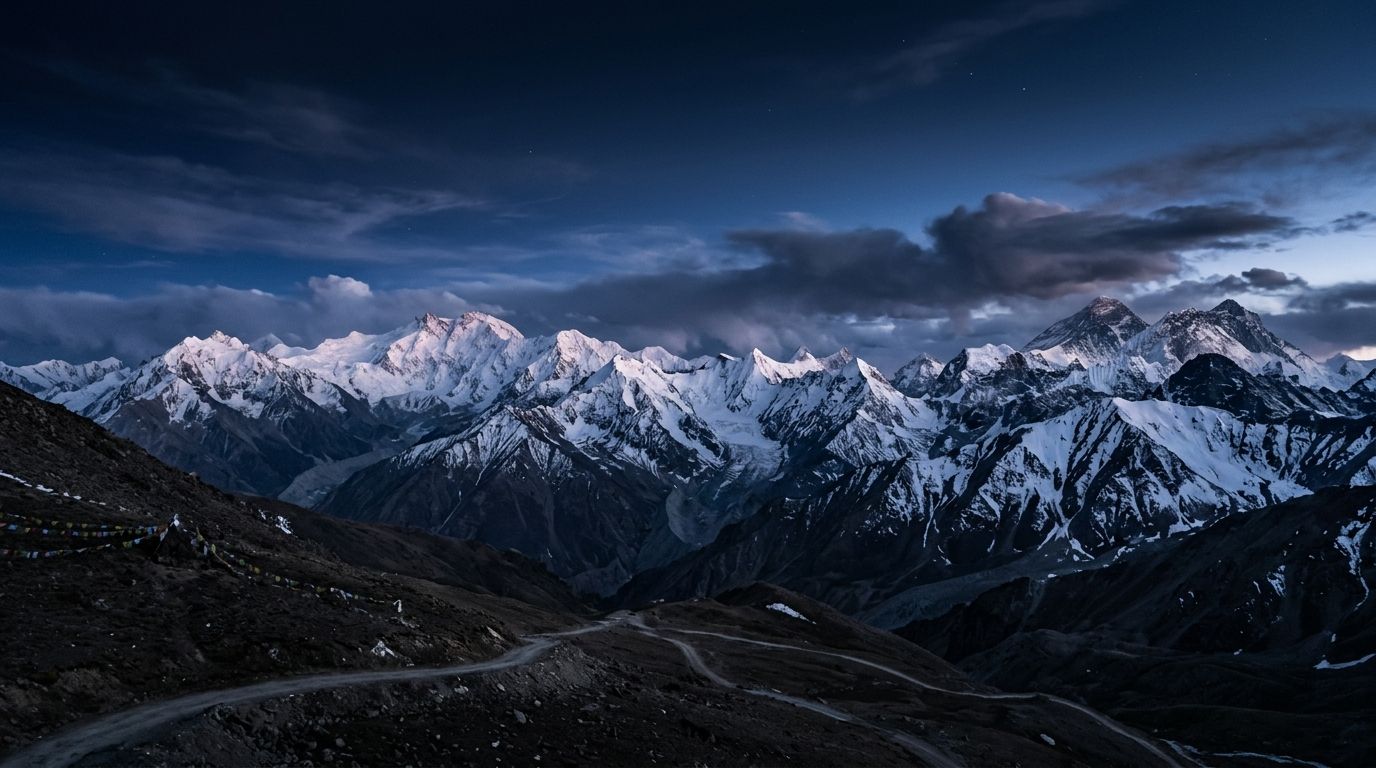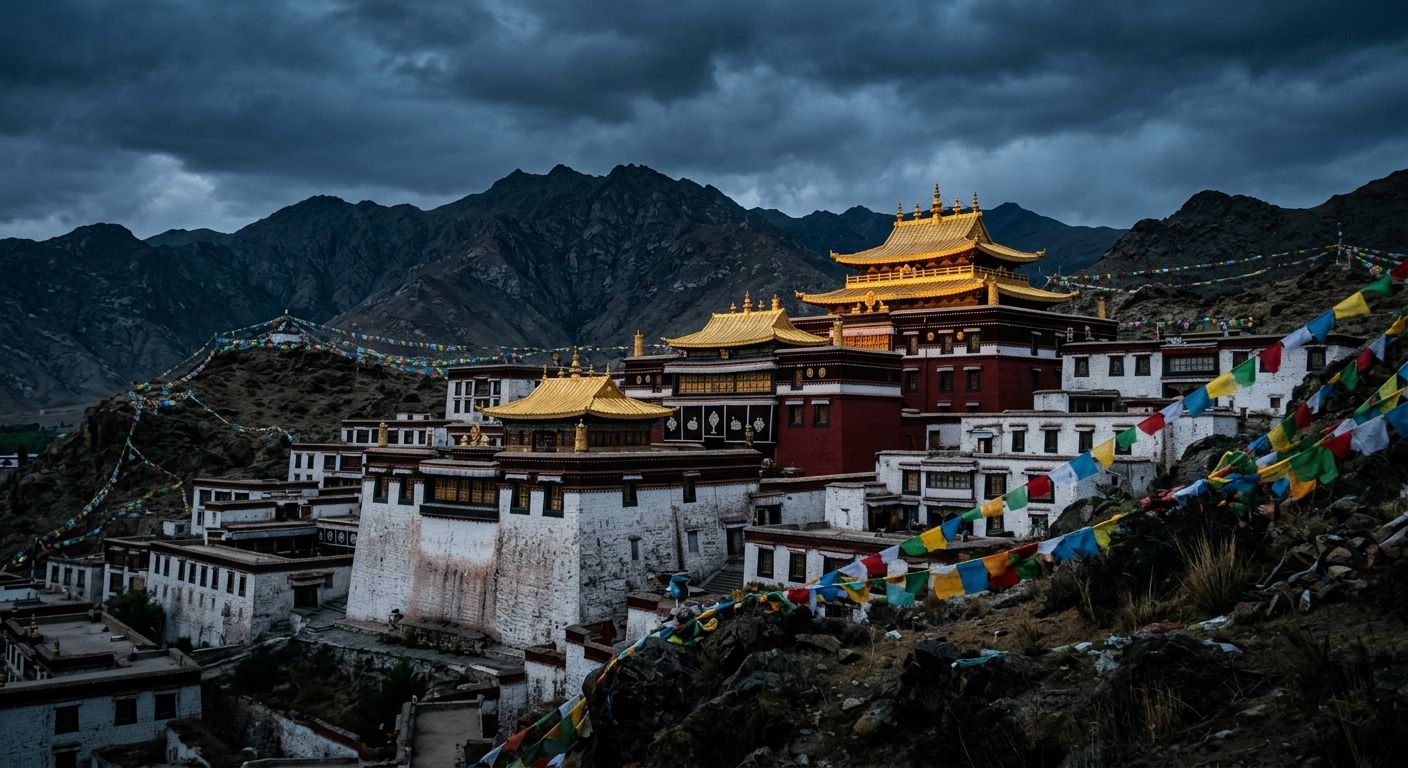
Every few months, we receive an inquiry that asks some version of the following question: "Can you arrange a spiritual component to the expedition?" The answer we give has evolved over four years of operation. Early on, we would describe the monastery visits, the morning prayer access, the private tea with the abbot. Now we answer differently.
We say: You will not need to arrange it. You will not need to sit cross-legged. You will not need to attend a workshop or read a book. If you are paying attention, the plateau will do the work.
This is not marketing. It is a description of what we have observed, consistently, across hundreds of guests, many of whom arrived skeptical and left quietly changed.
What Tibet Is Not
Tibet is not a wellness destination. We do not run retreats. We do not host teachers flown in to offer simplified Buddhism for Western audiences. The spiritual commodification industry — the Bali yoga retreats, the Swiss mindfulness programs, the Costa Rica "consciousness" experiences — has nothing to do with what happens here.
Tibetan Buddhism is a rigorous monastic tradition practiced by people who have dedicated their lives to it. It is not a self-help framework. The monks do not want your attention, your donations, or your social media posts. They want to be left alone to do their practice.
This is, paradoxically, why Tibet works. The lack of performance is the point. You are witnessing something that exists without regard for you, and that witnessing — if you are open to it — is more transformative than any paid workshop.
Three Observations Our Guests Consistently Report
Across post-expedition conversations, three specific insights emerge with remarkable frequency. None of them is a formal teaching. All of them are observed.
First: Impermanence as a structural feature of reality, not a concept to fear.
Western executive culture treats impermanence as a problem to be solved — through legacy, through wealth preservation, through the construction of enduring institutions. Tibetan monks build sand mandalas over weeks and then destroy them in minutes. The destruction is not tragic. It is the entire point.
Guests who observe this practice — we visit a monastery that creates mandalas during autumn departures — often return reconsidering how they relate to their own work. "I realized I had been trying to make permanent things," one founder told us. "And I was exhausting myself in the attempt. Something about watching that sand get swept away loosened a grip I did not know I had."
Second: Presence as a form of competence, not a form of escape.
Western mindfulness culture frames presence as relaxation. Tibetan Buddhist practice frames it as the highest form of attention — sharper, not softer, than ordinary consciousness. The monks are not calm because they are checked out. They are calm because they are fully checked in, and the noise of ordinary mental chatter has been trained into silence.
Guests who spend time with our senior guide Tenzin, who was raised monastic and maintains his practice, often notice this distinction. They describe him as "present in a way I don't see in business meetings." They notice their own attention sharpening after days in his company. Several have reported bringing this quality home and finding that their own decision-making improved — not because they became more relaxed, but because they became less distracted.
Third: Compassion as clarity, not sentimentality.
The standard Western framing of compassion as "being nice" maps poorly onto the Tibetan tradition. Compassion, in the Tibetan framing, is seeing reality clearly — including the suffering of others and your own role in causing or alleviating it.
This is more useful for executives than it initially sounds. The founders who have told us the most about what they learned in Tibet often describe it in operational terms: "I stopped managing my team to avoid discomfort and started managing them to help them succeed." "I became more honest with my co-founder because I finally saw what my avoidance was costing both of us."
The teachings are not commodifiable. But the observations are transmissible. Spend enough time in a landscape shaped by a particular way of seeing, and you begin to see some of it too.
The Scientific Footnote
None of this requires belief. The neurological effects of genuine silence, altitude, and novel environment are measurable. Studies of long-term meditators show structural changes in the prefrontal cortex and insula. Studies of altitude travelers show shifts in mood regulation and stress response lasting weeks after return.
You do not need to believe in karma to benefit from a week in an environment that was built around a different set of operating assumptions than the one you live in. The contrast alone does work.
What We Do Not Do
We do not teach Buddhism. We do not provide a curriculum. We do not hand out reading lists during the expedition (though we have recommendations if you ask — Pema Chödrön, Dzogchen Ponlop, the writings of the 14th Dalai Lama are our usual starting points).
We arrange access. Access to landscape, to silence, to specific moments where if you are paying attention, something shifts. What you do with that shift is yours.
A Warning
We occasionally encounter guests who return home and immediately try to translate the Tibet experience into a program — a morning routine, a meditation practice, a book they want to write. This sometimes works. More often, it dilutes the thing they were trying to capture.
The senior guides I have worked with would say: do not try to hold it. Let it act on you. If it changes how you show up to a board meeting six months later, that is the teaching. If it reminds you, at some bad moment, what silence sounds like, that is the teaching. You do not need to systematize it.
The Simple Version
If you are reading this and considering the expedition, do not come expecting spiritual transformation. Come expecting a difficult, beautiful, and attentive eight days in a landscape that has been shaped by a particular way of seeing for more than a thousand years. If something shifts, it will shift on its own terms.
If nothing shifts, you will have still seen Everest, eaten well, met extraordinary people, and returned with a full-frame Milky Way photograph.
That is already more than most vacations deliver.