One of the questions we receive most frequently from prospective guests during the consultation is some version of the following: "Can you arrange a helicopter from Lhasa to Everest Base Camp?"
The infrastructure to do this exists. There are licensed operators in Tibet who can fly Bell 407s and Airbus H145s into Rongbuk under controlled conditions. The cost would add roughly $15,000 to the expedition. From a pure unit-economics standpoint, this would be a profitable upgrade.
We have tested it three times in our operating history. We do not offer it as a standard option. This article explains the reasoning, in detail, because the reasoning matters more than the conclusion.
The Surface-Level Argument
The standard pitch for helicopter transfers in luxury travel is straightforward: time is the most valuable commodity for our guests. The drive from Lhasa to Rongbuk takes three days when done properly (with appropriate acclimatization and overnight stops). A helicopter transfer reduces the same trip to roughly four hours of flight time, plus one overnight stay near EBC.
If you frame the expedition as "see Everest as efficiently as possible," the helicopter wins on every metric. Lower travel time. Less fatigue. More executive-friendly schedule. Comparable photographic outcome at the destination.
This framing is wrong, but it took us several years to articulate why.
What the Drive Actually Is
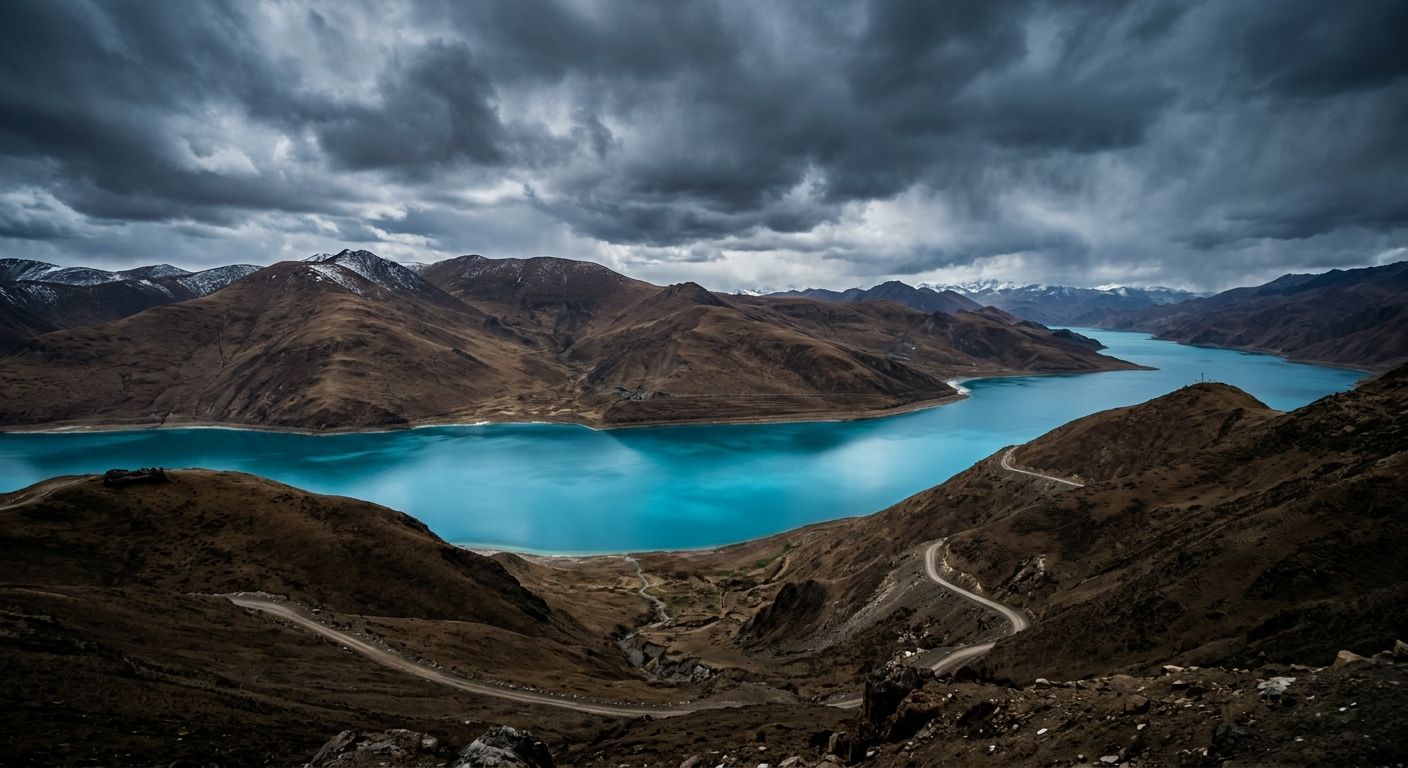
The Friendship Highway from Lhasa to Rongbuk — across Kamba-La Pass at 4,790m, past Yamdrok Lake, through Gyantse and Shigatse, over Gyatso-La Pass at 5,220m, and finally over Pang-La at 5,205m before descending into the Rongbuk Valley — is not a logistics problem. It is the curriculum.
Each pass introduces the body to a higher altitude in a controlled, gradual way. Each town introduces a different aspect of central Tibetan culture. Each landscape transition — from the cultivated valleys around Lhasa, to the high pastures, to the moonscape approach to Everest — recalibrates the visitor's expectations of what landscape can be.
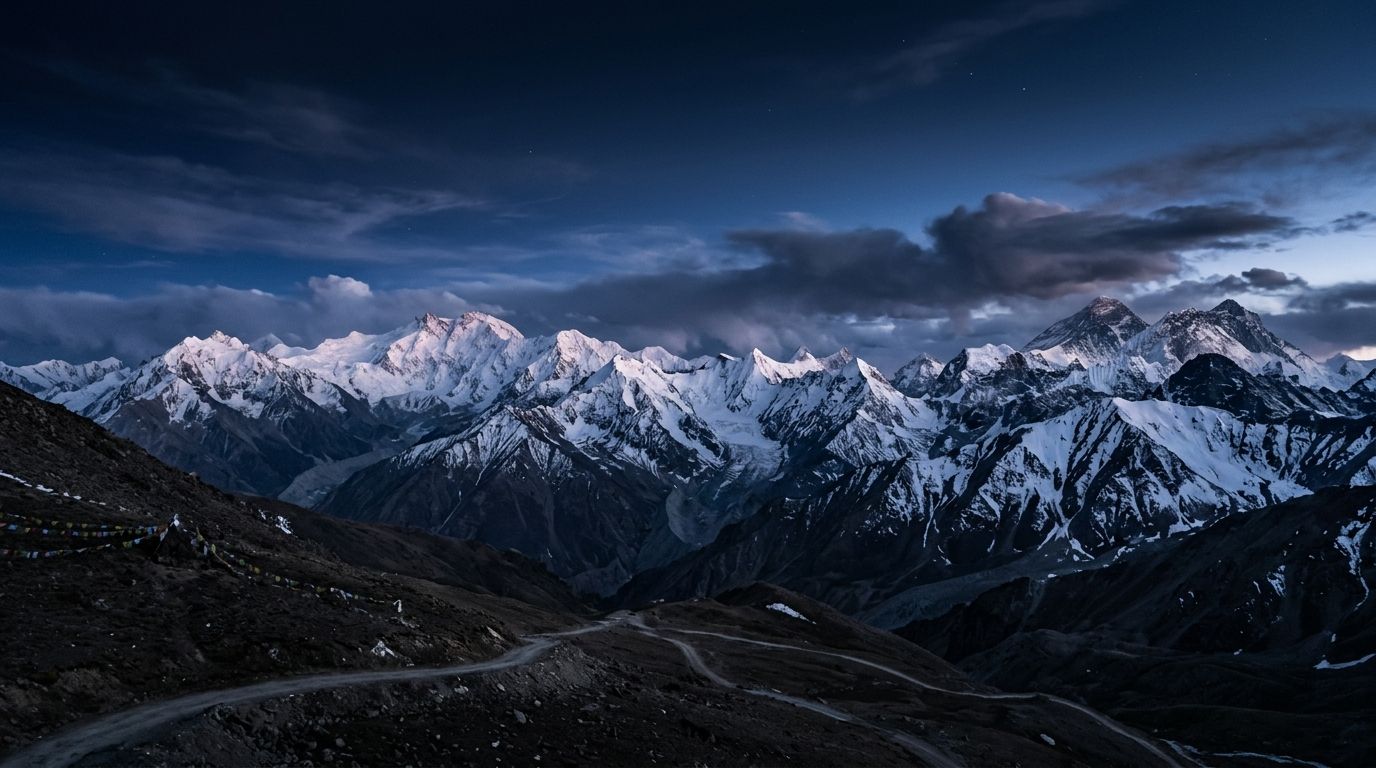
By the time you stand at the north face viewpoint on Day 6, you have spent five days arriving. Your body has adapted. Your perception has shifted. Your sense of scale has been progressively rewritten by every preceding day. The mountain, when you finally see it close, lands differently than it would have if you had simply stepped off a helicopter.
This is not a metaphor. We have tested it. The guests who flew direct to Rongbuk reported a fundamentally different — and consistently weaker — experience than the guests who drove.
The Three Test Cases
The first test was in 2021, with a guest who had a hard schedule constraint. He flew Lhasa to Rongbuk Valley, spent one night at our camp, photographed Everest at sunset, and flew back the next morning. Total trip: thirty-six hours.
His feedback, given two weeks after return: "It was beautiful. I will probably not do it again. It felt like an extraction — I was at Everest the way I am at any other landmark. I did not feel like I had been to Tibet."
The second test was in 2022, with a couple celebrating an anniversary who specifically wanted "the Everest experience without the drive." We arranged a hybrid: drive to Shigatse, helicopter from Shigatse to Rongbuk, drive back. Compressed the standard expedition into five days instead of eight.
Their feedback, six weeks after return: "We felt like we had bought a postcard. The mountain was incredible. The trip was forgettable. We did not understand what we had signed up for until afterward."
The third test was in early 2024, more recently, with a group of three who wanted to add a helicopter portrait flight at Rongbuk — not as a transfer, but as an additional photographic experience. The flight was arranged. The shots were beautiful. And during the post-expedition conversation, the guest who had requested it said something that stayed with us: "The drive was the trip. The flight was a souvenir."
These are not statistically significant numbers, but they are consistent with what we have observed across hundreds of full-itinerary expeditions. The guests who have done the drive talk about Tibet differently than the guests who have skipped parts of it.
The helicopter saves time at the cost of the experience. The drive costs time and produces the experience. These are not interchangeable. We will not pretend they are.
The Operational Argument
There is also a more practical reason we do not offer helicopters as standard. Tibet's high-altitude flight operations are weather-dependent in a way that ground operations are not.
The Pang-La approach to Rongbuk is unflyable on roughly 30% of operating days due to wind, cloud cover, or visibility. When the drive is your transfer method, weather adds friction but rarely cancels the day. When the helicopter is your transfer method, weather can compress your trip into a single window or eliminate the Rongbuk visit entirely.
We have built our reliability around the drive. Almost every Tibet Reserve expedition reaches Everest on schedule. The few that have been delayed were delayed by hours, not days, and the delay added story rather than subtracting from the experience. We could not honestly promise the same reliability with a helicopter-dependent itinerary.
The Environmental Argument
We are reluctant to make this argument because it is often used cynically by luxury travel operators to dress up a price increase as a virtue. But it is genuinely true that helicopter operations at extreme altitude are disproportionately damaging — both in fuel consumption per passenger-kilometer and in the disturbance to wildlife and monastic communities.
Rongbuk Monastery is a functioning religious community at 4,980 meters. The monks practice in a soundscape that has been more or less constant for centuries. Helicopter approaches over the monastery are intrusive in a way that most luxury operators do not want to acknowledge.
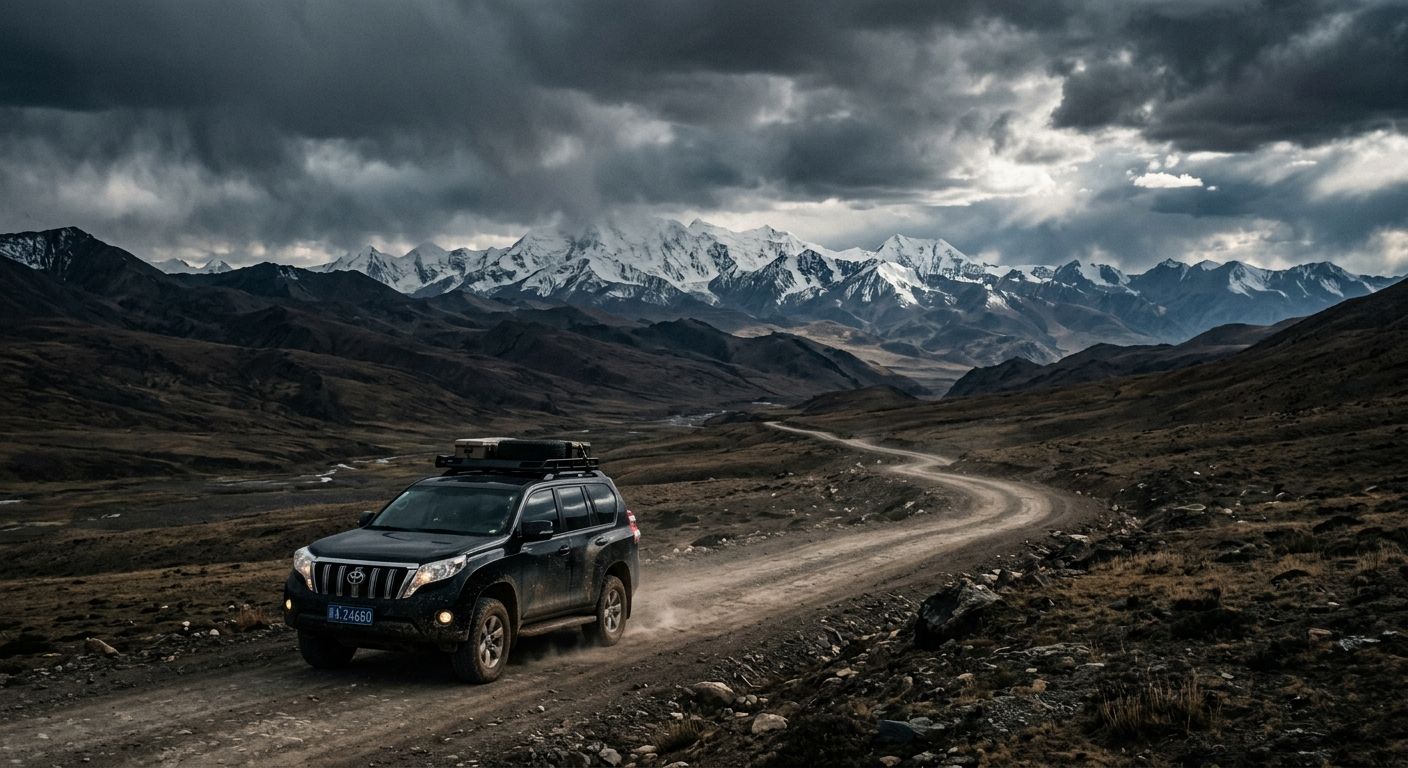
We can drive past the monastery in a Prado, slow down, let our guests step out and walk in respectfully. We cannot do this with a helicopter. Or rather, we can, but the helicopter announces itself in a way the Prado does not.
This is not a marketing position. It is a relationship management position. We need the abbot of Rongbuk Monastery to continue trusting that our guests will arrive quietly and respectfully. A helicopter approach undermines that trust.
The Honest Exception
There is one circumstance in which we will arrange a helicopter, and it is a medical one. If a guest develops symptoms requiring urgent descent, we have pre-arranged emergency air evacuation contracts with operators based in Lhasa. The aircraft can reach Rongbuk in approximately ninety minutes from initial dispatch.
This is not a marketing line. It is a redundancy. The primary plan is always ground evacuation via our second Prado, which can descend faster than altitude symptoms typically progress. The helicopter is a backup for the rare scenario where ground evacuation is insufficient.
We have used this contingency twice in four years. Both times the guest made a full recovery. The helicopter is for emergencies, not for itineraries.
What We Will Arrange
Guests who genuinely cannot commit eight days to the expedition have alternatives we will discuss honestly:
- —**A reduced itinerary that excludes Everest** — five days, central Tibet only (Lhasa, Yamdrok, Gyantse, Shigatse). This is a different trip but it is still a Tibet Reserve expedition.
- —**A future-dated booking** — if the timing is wrong now, we will hold a place for a future window. The mountain will still be there.
- —**A multi-stage expedition spread across two trips** — central Tibet first, Everest later, with the acclimatization benefit of having altitude exposure in the recent past.
What we will not do is sell you the helicopter version of our expedition and let you believe you have experienced what we actually offer. The honest answer is no. The honest alternative is a different itinerary that we are happy to design.
The Underlying Principle
There is a broader principle at work here that applies to most decisions we make. The luxury travel industry has a tendency to optimize for the convenience of the guest at the expense of the substance of the experience. Faster transfers. Compressed itineraries. Removed friction.
We optimize differently. We remove friction where friction does not contribute to the experience (permits, luggage, logistics, decisions about restaurants). We preserve friction where the friction is the experience (the slow ascent, the time at altitude, the silence between sites).
The drive to Everest is not friction we should be removing. The drive to Everest is the trip we are selling. The mountain at the end is the punctuation mark, not the sentence.
If that argument resonates, you understand what we offer. If it does not, we are probably not the right operator for you, and we mean that without judgment. There are operators who will fly you to Everest in a helicopter. We are not one of them.