The Tibet Reserve
DiarioSalidas
Consulta privada
The Art of the Private Picnic at Yamdrok Lake
The ExperienceFebruary 2026·6 min read

The Art of the Private Picnic at Yamdrok Lake

By Bob Wang

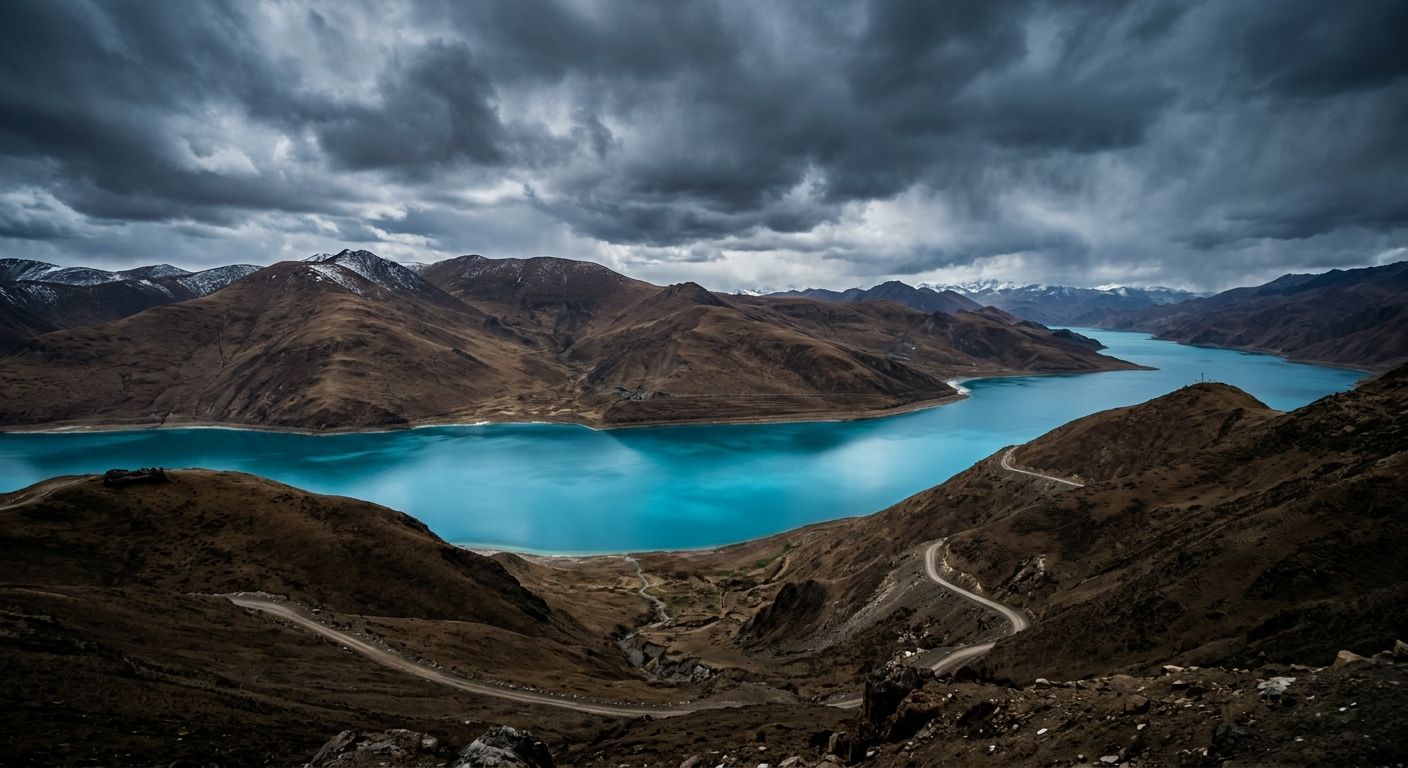
At 4,441 meters, on a secluded shoreline of one of Tibet's three sacred lakes, we set a table that no restaurant on earth can replicate.

At 4,441 meters, on a secluded shoreline of one of Tibet's three sacred lakes, we set a table that no restaurant on earth can replicate. Not because the food is extraordinary — though it is carefully sourced. But because the setting is impossible to manufacture.

01

The Setup

Our guide arrives at the shoreline 90 minutes before the guests. A high-end, off-grid seating arrangement is deployed — not camping chairs and a folding table, but properly upholstered seating with wind shields, thermal blankets, and a dedicated service setup.

The coffee is hand-poured on site. Not from a thermos. From a portable brewing station with freshly ground beans, heated by a compact gas burner that performs surprisingly well at altitude (water boils at approximately 85°C at this elevation, which actually produces a smoother extraction).

Godiva chocolates are presented at precisely the right temperature — a non-trivial achievement when ambient temperatures hover around 8°C with a wind chill that can drop perceived temperature to -5°C.

02

The Menu, in Detail

We do not pretend the food is the point, but the food is still the food. Our standard Yamdrok service opens with a small plate of Shigatse yak cheese aged six months, cold-smoked apricots from a family orchard near Lhatse, and a thin sourdough crisp we bake in Lhasa the morning of. Alongside that, a jar of tsampa granola, slightly sweet, that guests either ignore or finish entirely. The warm course is a small clay bowl of butter tea for those who want it, and a clear mushroom broth with barley for those who do not. Dessert is, deliberately, restrained: two pieces of chocolate and a single madeleine, still warm from an insulated carrier.

The chocolates are not generic. We rotate between Godiva's seasonal Masterpiece selection — the Dark Ganache Heart and the Praline Feuilletine in particular travel well at altitude — and, when we can source them, single-origin pieces from Maison du Chocolat. The Pléiade box, with its thin ganaches, holds its temper in the cold air better than bars do. We unwrap each piece on site rather than in advance, because the moment of reveal matters.

The coffee is a choice between two beans we ship in every fortnight. Blue Bottle's Bella Donovan blend, a chocolate-forward cup that reads as comforting at altitude, and Intelligentsia's Black Cat Classic Espresso, which we pull as a long pour-over rather than as espresso because the pressure math does not work at 4,441 meters. Guests are asked in the pre-trip questionnaire. The choice is already on the mountain before they ask for it.

04

Wind, Light, and Setup

Yamdrok's wind is not incidental. It runs off the southern ridge in the morning and flips direction in the late afternoon, and we have learned to position the table accordingly. We place the upholstered lounge with the guest's back to the prevailing gust and the shoreline at a forty-five-degree angle, so the turquoise of the water fills peripheral vision without forcing a direct squint into the sun. The wind shields go up early; the thermal blankets go on the seat, not across the legs, so guests can adjust without asking.

The timing is deliberate. We aim for a window roughly ninety minutes before sunset on the day we drive Lhasa to Gyantse, which in late spring means a service that starts around five in the afternoon and lets guests watch the golden hour turn the ridge above Nakartse from slate to rose gold to the specific cold blue that only happens at this elevation. The light itself is the dessert course.

Guests are not paying for the coffee. They are paying for the silence around the coffee.

05

What the Guides Do During Setup

The choreography behind a ninety-minute head start is not filler. Two guides work the site while a third stays with the vehicles out of sight. One sets the seating, windbreak, and thermal surfaces, then checks the angle of the sun against a physical compass and adjusts. The other runs the service station: grinder calibrated, burner primed and tested, water heated to a precise 92°C, pour kettle warmed against the cold ambient. Plates, ceramics, and linens are staged inside insulated carriers and only exposed at the last possible minute.

They also sweep. Literally — a soft brush over the immediate area to remove any plastic scrap, cigarette filter, or prayer-flag fragment left by a previous traveler. The guest should arrive at a site that reads as untouched, because for the next ninety minutes it is.

06

Why This Matters

The private picnic at Yamdrok Lake is not about the coffee or the chocolates. It's about the contrast.

Our guests are people who can eat at any restaurant on the planet. Many have private chefs. Some have private dining rooms in their offices. They are not impressed by ingredients or technique.

What they cannot replicate — at any price, in any city — is the experience of drinking excellent coffee while staring at a body of water so turquoise it looks artificial, surrounded by barren mountains under a sky that seems impossibly close, in perfect silence, with no other human being visible in any direction.

That's the product. The coffee is just the delivery mechanism.

08

The Details We Don't Advertise

Every menu item served during the expedition has been pre-screened against each guest's dietary profile. Not just allergies — preferences. Aversions. We eliminate generic ingredients, heavily preserved items, and anything that might create a moment of culinary friction.

The guest doesn't know this. They simply notice that everything tastes right. That's the standard.

09

The Return Journey Ritual

After the service, we do not pack up in front of the guest. They leave the table warm; the breakdown happens after they have walked the shoreline for fifteen minutes, alone if they prefer, or with a guide offering only the quiet ambient commentary we have found people actually want at this moment — what the prayer flags mean, which ridge the next day's route crosses, where the fish in the lake come from.

Back in the Land Cruiser, on the hour-long drive toward Gyantse, we do something we call the return ritual, which is really just a prompt. The guide asks one question: "What did you notice that you would not have noticed a week ago?" And then says nothing else. Guests answer, or they don't. Either is correct. Many tell us, months later, that this is the moment of the trip they remember most clearly — not the lake itself, but the drive away from it, when the thing that had just happened began to settle into the version they would eventually take home.

About the Author

BW

Bob Wang

Founder, The Tibet Reserve

Bob Wang is the founder of The Tibet Reserve. Over the past decade he has traveled the Tibetan Plateau more than forty times, building relationships with local operators, monastic communities, and permit authorities that make genuinely private expeditions possible. He writes from direct experience — not a desk.

Begin

Ready to experience this yourself?

Every expedition begins with a conversation. No commitment required.

Request a Private Consultation