Most luxury travel operators treat the Friendship Highway as a logistics problem — the long drive from the city to the mountain. We treat it as the central spine of the expedition. More than a third of the guest journal entries our guests later share are written during or about this drive.
Here is what actually happens across three days and 700 kilometers.
Day 3 Morning — Lhasa to Gyantse (264 km, approximately 5 hours)
We depart Lhasa at 9am. The St. Regis doorman has already loaded your luggage, and our senior guide Tenzin has completed the permit check with the Public Security Bureau. You do not see any of this happen. You walk out, get in the Prado, and we go.
The first thirty minutes out of Lhasa are unremarkable. Modern Chinese infrastructure. Truck traffic. Concrete. The interior feels like any other highway in a mountainous country.
Then the Kamba-La Pass (4,790m) begins to rise.
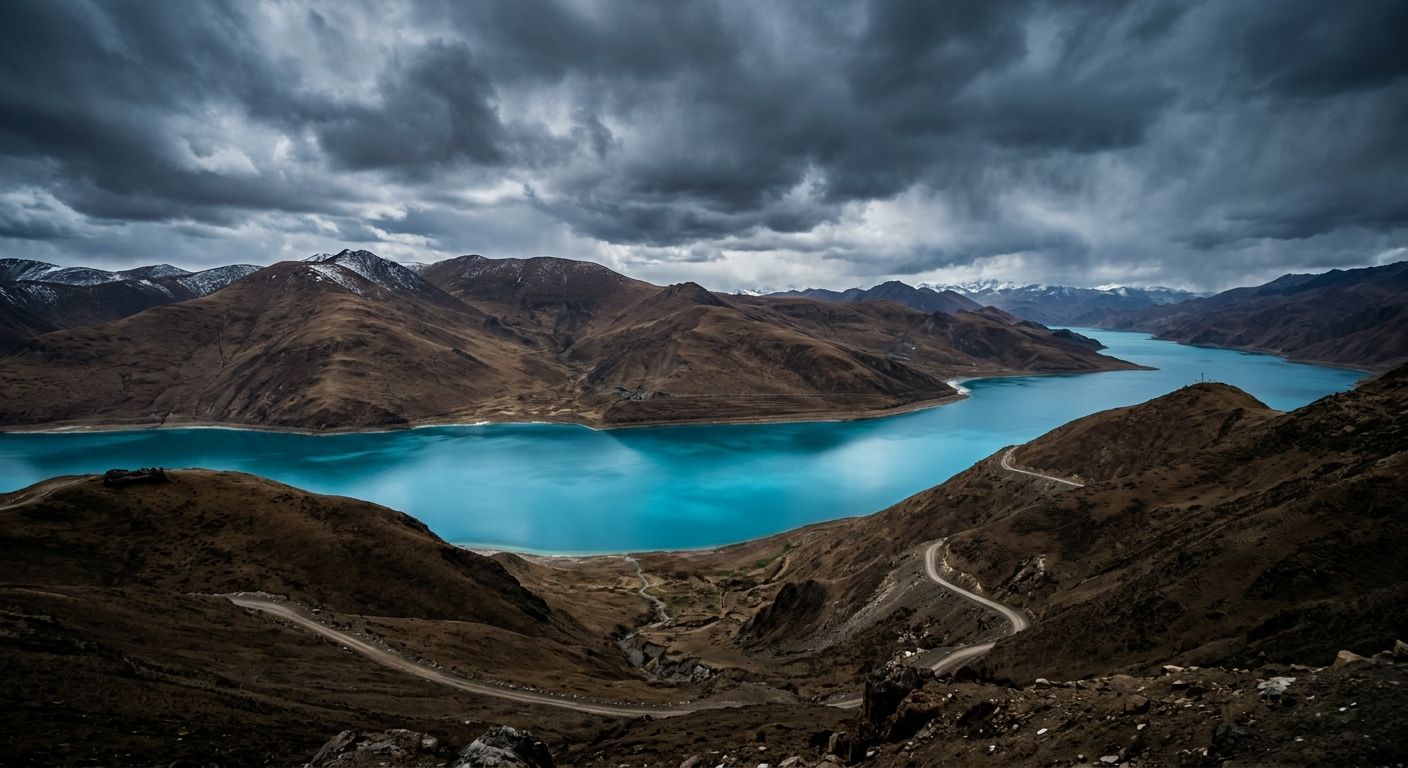
The first altitude milestone of the expedition happens here. The road switches back through increasingly stark terrain, and at the pass summit, without any ceremony, Yamdrok Lake appears below.
We stop for twenty minutes. This is not a photo stop — this is the first moment when most guests understand that the expedition is not metaphorically about Tibet, it is literally in Tibet. The turquoise of the lake against the desert-brown surrounding mountains is not something your eyes are prepared for.
We continue. The road descends to the lakeshore. Lunch is at our preferred picnic location (detailed in a separate journal entry). By 3pm we cross the Karo-La Pass (5,045m), the first time on the expedition you will stand above 5,000 meters. The glacier on the right side of the road is close enough to touch.
We arrive in Gyantse by 5pm. The Gyantse Dzong Heritage Inn is a restored nobleman's residence with sixteen suites. Dinner at 7:30pm. Early bed — tomorrow is a shorter driving day, but the altitude means you will want the rest.
Day 4 — Gyantse to Shigatse (95 km, approximately 2 hours)
This is the expedition's breathing day. We depart at 10am, which feels luxurious after the 9am start the day before.
The drive is gentle. We pass through the fertile Nyang-Chu valley, one of the most productive agricultural zones in central Tibet. Barley fields, sheep, the occasional walled village that has existed in more or less its current form since the 15th century.
We arrive in Shigatse by noon. The afternoon is reserved for Tashilhunpo Monastery, seat of the Panchen Lama. This is one of the most significant monasteries in Tibetan Buddhism, housing the world's largest gilded bronze statue (26 meters tall). We do not rush this visit. Our guide Tenzin has a personal relationship with several of the resident monks, and depending on the day, you may be invited into the butter-lamp prayer hall that tourists do not access.
Dinner in Shigatse. The food quality drops slightly from Lhasa — you are now in a smaller city — but the Hilton Shigatse maintains international standards. Early bed again.
Day 5 — Shigatse to Tingri (244 km, approximately 5 hours)
This is when the expedition begins to feel truly remote.
We leave Shigatse at 9am. The road climbs steadily for the first two hours. By mid-morning you are consistently above 4,000 meters and the landscape has shifted — fewer villages, less agriculture, more of the high-altitude emptiness that makes the plateau unique.
Lunch at our location near Lhatse, a small town where the road to Everest Base Camp branches south from the main Friendship Highway that continues to Nepal. From here on, vehicle traffic drops dramatically. You may not see another car for long stretches.
The Gyatso-La Pass (5,220m) is the next major landmark. This is the second time on the expedition you will be above 5,000m, and the landscape on either side of the pass is distinctive — broad, almost lunar, with the Himalayan range appearing as a continuous white wall across the southern horizon.
We stop for thirty minutes. Our guide will point out, in sequence: Cho Oyu (8,188m), Makalu (8,485m), Lhotse (8,516m), and Everest (8,848m). All four are visible on a clear day. This is the first sight of Everest.
Most guests stand silently for a while.
We continue to Tingri, arriving by 4pm. The Tingri Plateau Inn is the simplest accommodation of the expedition — a boutique heritage property with twelve suites, heated by a ground-source heat pump. You are now at 4,300m. Dinner is early. Sleep comes slowly.
Day 6 — Tingri to Rongbuk (130 km, approximately 4 hours)
Today is the summit of the expedition in every sense.
We depart Tingri at 7am. Early because the drive to Rongbuk includes the Pang-La Pass (5,205m), and we want to be at the pass during the morning light when Everest is typically at its clearest.
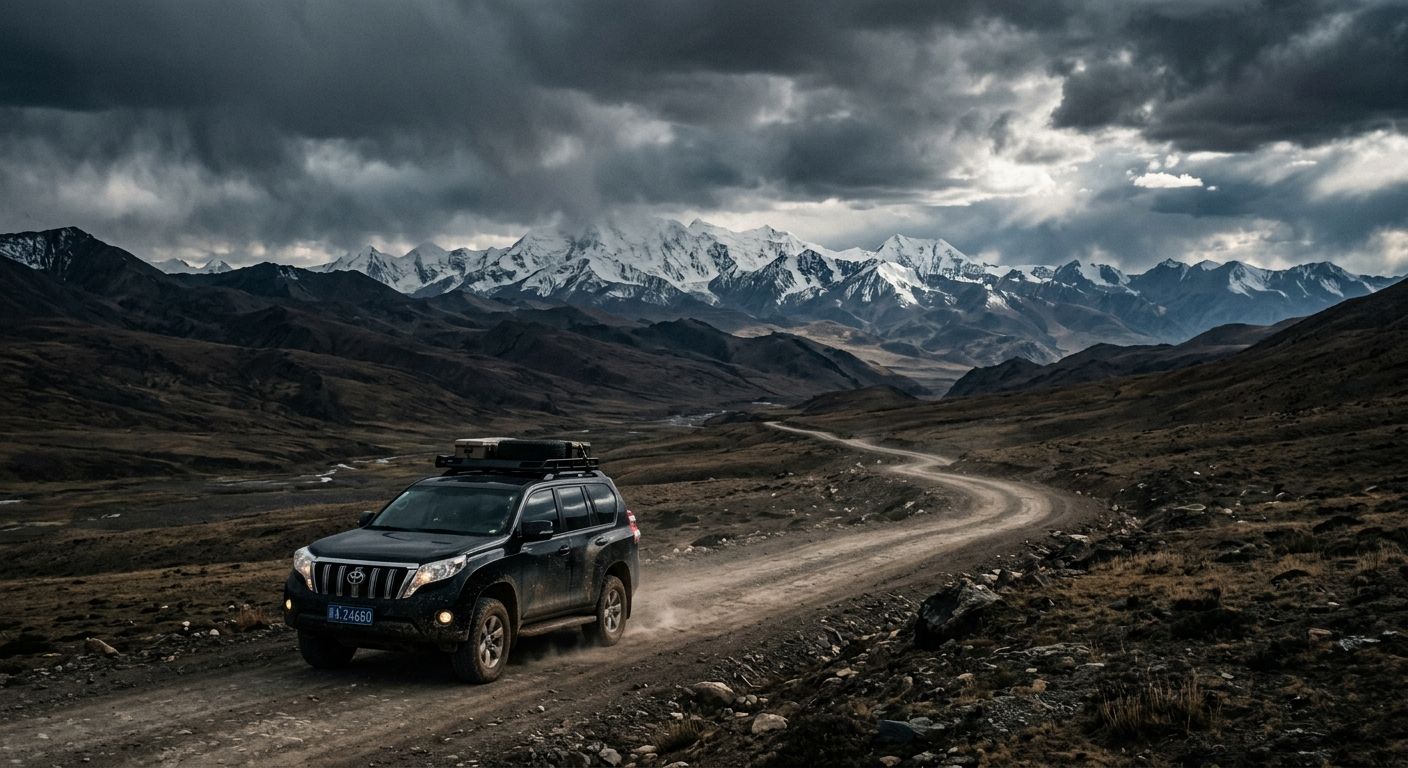
The road is unpaved for stretches. Our Prados are specifically equipped for this — chassis rigidity matters more than speed. You will feel the road. This is part of the experience.
Pang-La switchbacks are famous among travel photographers for the panoramic view they offer — five 8,000m peaks visible in a single frame on a clear day. We stop for thirty minutes. The wind at Pang-La is aggressive; we have thermal blankets and hot tea ready.
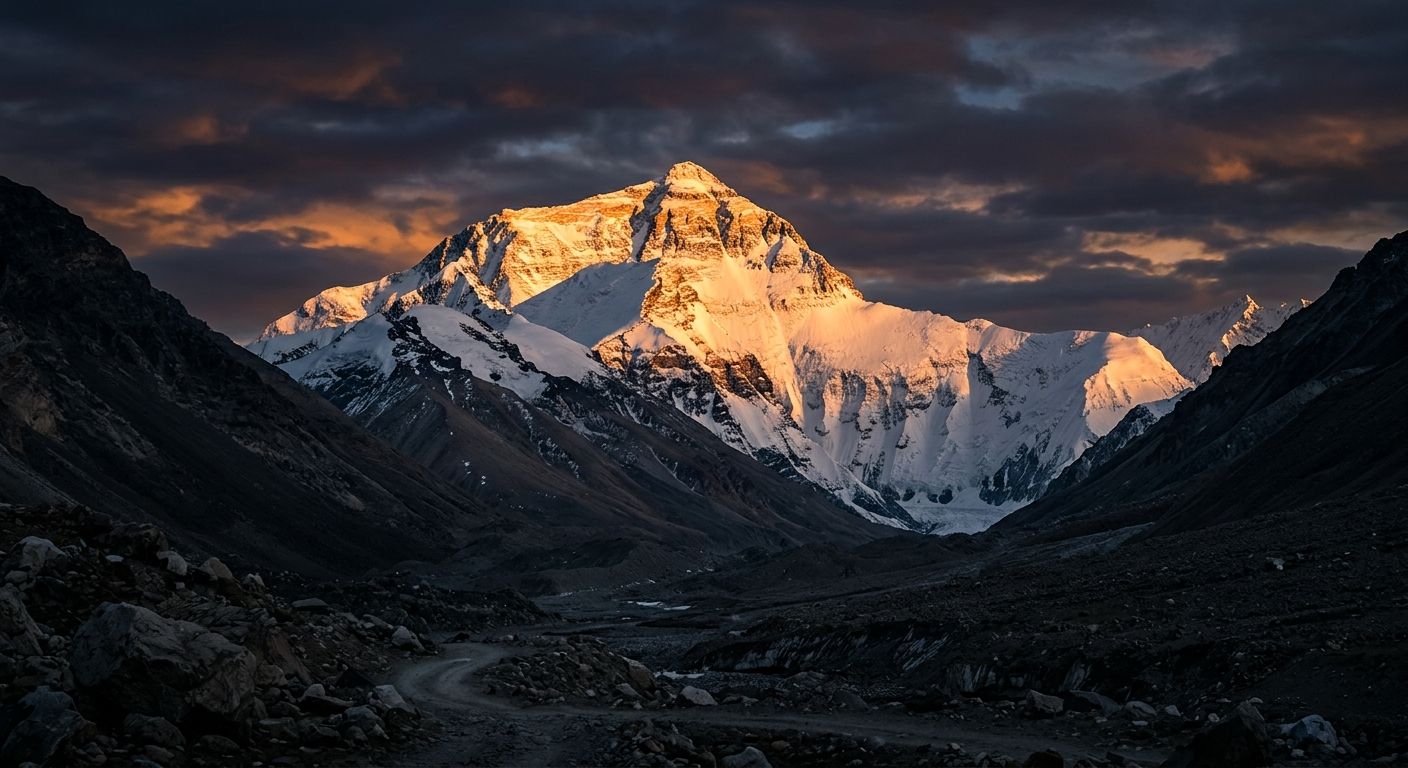
From Pang-La, the road descends into the Rongbuk Valley. This is where the scale of Everest becomes geological rather than photographic. The peak fills the southern horizon entirely.
We arrive at Rongbuk Monastery (4,980m) by 11am. This is the world's highest active monastery. The monks here are Nyingma school — the oldest lineage of Tibetan Buddhism. We spend thirty minutes in the prayer hall. Tenzin, who has brought guests to this monastery for over a decade, usually exchanges a few words with the abbot.
We continue the final 8 kilometers to our Rongbuk Exclusive Camp. By 12:30pm you are at 5,200 meters. Lunch is in the camp dining yurt, which is pressurized to approximately 4,500m equivalent.
The afternoon is yours. We recommend resting, but some guests prefer to walk to the viewing platform — 400 meters from the camp — to spend time with the mountain.
The drive is the expedition. The arrival is the moment. Both are equally important, and one cannot happen without the other.
The Evening at Rongbuk
At 5:30pm, we depart for the sunset viewing point with cameras and drone. We have written a full journal entry about this. It is the most photographed moment of the expedition, but also the most genuinely moving one.
We return to camp by dark. Dinner at 8pm. At 9pm, weather permitting, we walk to the astrophotography point — 200 meters from camp, away from any camp lighting. The Milky Way at 5,200m with zero light pollution is, in the honest assessment of guests who have traveled to 60+ countries, the best sky they have ever seen.
Sleep comes at 10pm. Heated tent. Oxygen supply. Warm meal. You have arrived.
Day 7 — The Descent
We do not sleep above 5,000m. The reason is physiological — sleep at extreme altitude is when the most serious altitude events occur. We wake at 6am for one final sunrise viewing (Everest alpenglow from the north face is different from the sunset angle), then we descend.
By noon we are back in Tingri. By evening, we have returned to Shigatse. The psychology of the descent is specific — most guests describe a particular quality of quiet on this drive, as though they are carrying something carefully.
What the Drive Actually Delivers
The Friendship Highway is not a shuttle. It is how the plateau teaches you what it is. The changing altitude, the shifting landscape, the gradual thinning of human infrastructure — all of it is pedagogical, even if nobody is explicitly teaching.
You arrive at Everest ready to see it. Not because a guide has prepared you with facts, but because the landscape has prepared you with time.
This is why we do not offer a helicopter transfer to EBC, even though the infrastructure exists and the option would be more profitable. The helicopter skips the preparation. The arrival without the journey produces a different, lesser experience. We have tested it. We are certain.
The drive is the expedition. We would not build the trip any other way.