The most frequent hesitation we encounter during the initial consultation is not about price, or schedule, or privacy. It is about altitude. Specifically: "Is this safe for me?"
The answer, for the overwhelming majority of guests, is yes — but only because we treat altitude as a medical discipline rather than a travel inconvenience. This article describes, in detail, how we do that.
Pre-Departure Medical Review
Every expedition begins with a medical consultation. Not a form. A conversation with our expedition physician, Dr. Sarah Lowe, who has twelve years of experience in high-altitude medicine and has supported expeditions on six of the seven continents.
The consultation reviews:
- —Current medications and their altitude interactions
- —History of cardiovascular or pulmonary conditions
- —Previous altitude experience and any incidents
- —Current fitness baseline, including resting heart rate and VO2 max if known
- —Specific concerns — sleep apnea, migraines, Raynaud's, anything that might intersect with altitude physiology
Based on this review, Dr. Lowe may recommend pre-departure bloodwork, an EKG, or a pulmonary function test. These are not gatekeeping exercises. They are how we anticipate complications before they occur at 5,200 meters where evacuation is slow and expensive.
Approximately 8% of prospective guests are advised to reconsider or delay their expedition based on this review. We would rather lose that revenue than have a preventable medical event at altitude.
The Acclimatization Architecture
The expedition itinerary is engineered around altitude physiology, not scenery.
Day 1 — Lhasa (3,650m): Arrival day. We do not schedule activities. You rest in oxygen-enriched suites at the St. Regis, where rooms are supplemented to approximate 2,500m equivalent. Your body begins producing additional red blood cells while you sleep.
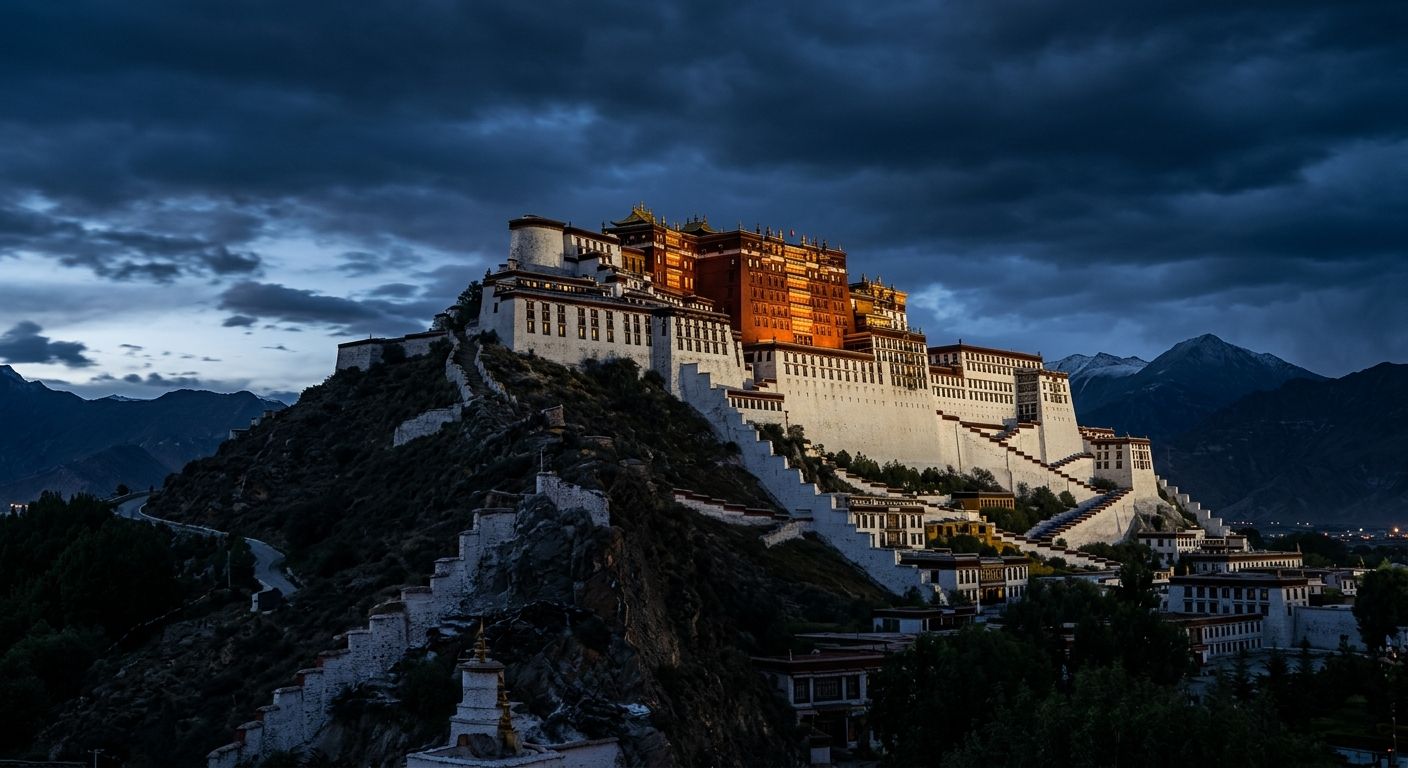
Day 2 — Lhasa acclimatization: Gentle walking only. Potala Palace exterior viewing. Jokhang Temple. No stairs, no rushing. Guests report feeling slightly breathless on moderate exertion — this is normal and expected.
Day 3 — Lhasa to Gyantse (3,977m): 327m net ascent. Well within the 500m/day maximum that every high-altitude medical protocol recommends.
Day 4 — Gyantse to Shigatse (3,840m): Slight descent. A physiological "sleep low" night that helps consolidate acclimatization gains.
Day 5 — Shigatse to Tingri (4,300m): Moderate ascent with continuous monitoring.
Day 6 — Tingri to Rongbuk/EBC (5,200m): The big day. We monitor blood oxygen saturation (SpO2) and heart rate every hour during the drive. If any guest's SpO2 drops below 85% for an extended period, we descend and try again the following morning.
Day 7 — EBC morning, descent afternoon: We do not sleep above 5,000m. Sleep at high altitude is when most serious altitude events occur. We return to Tingri for overnight.
This design reflects two decades of high-altitude best practice. We did not invent it. We adhere to it.
The Equipment
Every vehicle carries:
- —Two 40-litre medical-grade oxygen cylinders with clinical delivery masks
- —Pulse oximeters (we use Nonin brand — hospital-grade, accurate at altitude)
- —A portable Gamow bag (pressurized bag for emergency descent simulation)
- —A satellite phone with pre-programmed emergency numbers
- —A comprehensive first-aid kit including dexamethasone, acetazolamide, nifedipine, and sildenafil — the pharmaceutical arsenal for altitude-related emergencies
- —An automated external defibrillator (AED)
The expedition physician travels in the second vehicle and is in continuous radio contact with the lead vehicle. In four years of operations, we have deployed supplemental oxygen for approximately 30% of guests at some point during the expedition — most commonly as a precautionary measure during the highest-altitude days. We have never required emergency descent.
The Pharmaceutical Protocol
Our approach to altitude medication is conservative and evidence-based.
Acetazolamide (Diamox): We recommend 125mg twice daily starting 24 hours before ascending above 3,000m, continuing through the highest-altitude days. This is half the "standard" dose often cited in guidebooks. The lower dose significantly reduces side effects (tingling, altered taste, increased urination) while retaining most of the prophylactic benefit.
Dexamethasone: Carried by the physician for emergency use only. Not prescribed prophylactically.
Ibuprofen: For altitude headaches. Effective, inexpensive, low-risk.
Alcohol: None, for the duration above 4,000m. Alcohol depresses respiration, which is precisely the opposite of what your body needs at altitude. We do not stock it above 4,000m and respectfully decline to serve it.
Altitude is not a challenge to conquer. It is a variable to manage. The guests who do best are the ones who understand this distinction.
What Guests Actually Experience
Most guests report some degree of altitude awareness — mild headache, slight breathlessness on exertion, vivid dreams, occasional poor appetite. These are expected and do not indicate any medical concern.
A smaller percentage experience more pronounced symptoms: moderate headache, mild nausea, disrupted sleep. We have specific interventions for each: additional rest, increased hydration, supplemental oxygen during sleep, ibuprofen.
In four years of operations, one guest experienced early-stage pulmonary edema (HAPE) and was descended immediately to Shigatse. She made a full recovery within 48 hours and subsequently completed the expedition by rejoining at lower altitude for the remaining days. This is the only serious altitude event we have managed, and it was caught early precisely because of our monitoring protocol.
The Oldest and Youngest
Our youngest guest was 28. Our eldest was 74. The 74-year-old had well-controlled hypertension, was on statin therapy, and completed the full itinerary including Everest Base Camp without supplemental oxygen. He described it as the best trip of his life.
The data point that matters more than age is cardiovascular health. A fit 60-year-old will handle altitude better than an unfit 35-year-old. If you are unsure where you fall on that spectrum, that is exactly what the medical consultation is for.
The Honest Answer
Altitude at 5,200m is not trivial. It is not, however, mysterious. The physiology is well understood, the protocols are proven, and the interventions work.
If you are generally healthy, able to walk 30 minutes at a comfortable pace, and willing to follow our clinical recommendations, the expedition is safe. If you have specific medical concerns, the consultation is the right place to discuss them honestly.
We would rather have a difficult conversation in advance than an emergency at 5,200m. So would you.