The Tibet Reserve
ЖурналДаты отправления
Конфиденциальный запрос
Altitude and the Executive Mind: What Happens Above 5,000 Meters
The ExperienceFebruary 2026·6 min read

Altitude and the Executive Mind: What Happens Above 5,000 Meters

By Bob Wang

At 5,200 meters, the air contains 53% of the oxygen available at sea level. Your brain, which consumes 20% of your body's oxygen, notices immediately.

At 5,200 meters, the air contains 53% of the oxygen available at sea level. Your brain, which consumes 20% of your body's oxygen, notices immediately. This is not a metaphor. This is physiology.

01

The Science of Thin Air

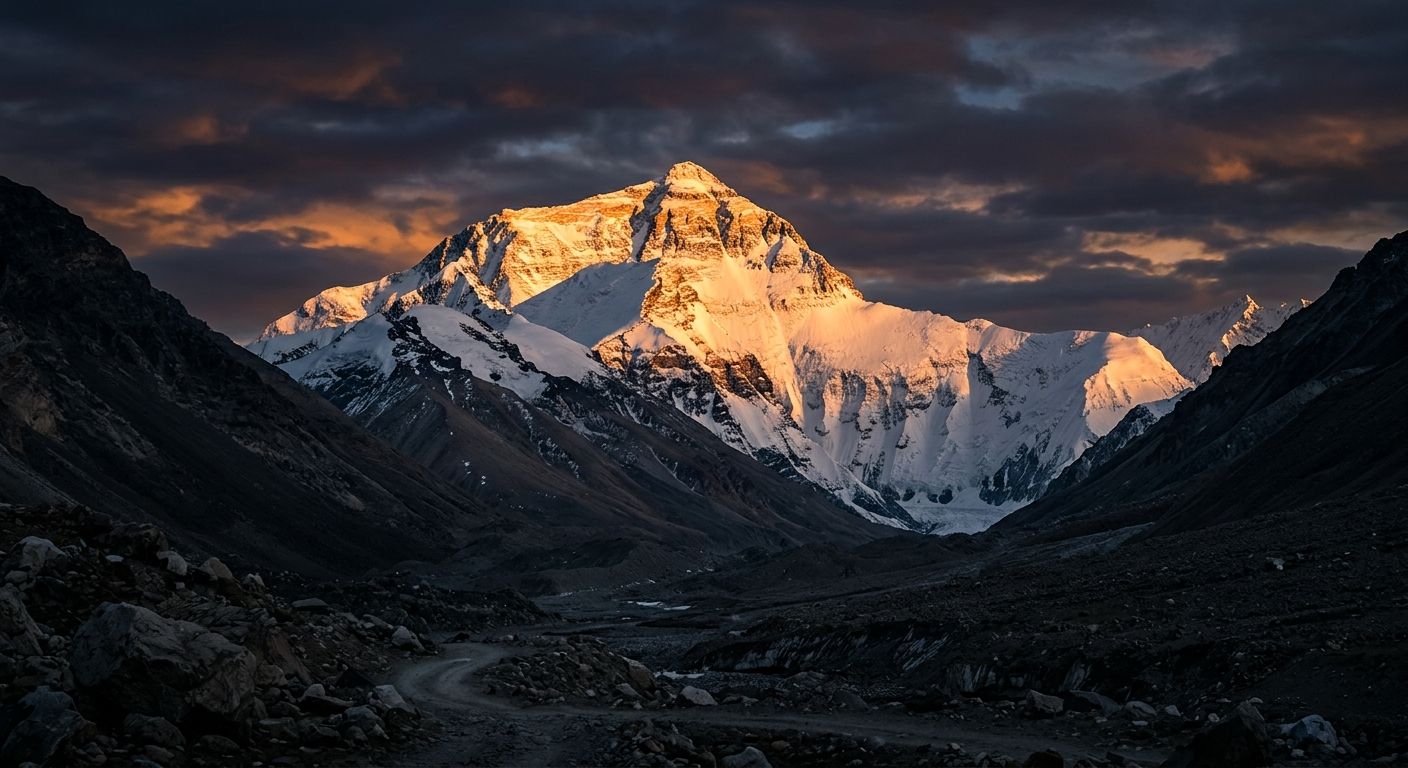
When you ascend to Everest Base Camp from the north — our route through Tibet — your body initiates a cascade of adaptive responses. Red blood cell production increases. Breathing deepens. Heart rate elevates. These are not signs of failure. They are signs of a biological system operating at its design limits.

For executives accustomed to optimizing systems, this is an unusual experience: being the system that needs optimization.

02

The Neuroscience of Acute Mountain Sickness

Acute Mountain Sickness — AMS — is not a character flaw. It is a neurovascular event. As barometric pressure drops, arterial oxygen saturation falls, and cerebral blood vessels dilate to compensate. That dilation raises intracranial pressure, which the body reads as a dull, circumferential headache. Nausea, appetite loss, and a peculiar sluggishness in short-term recall follow. Guests often describe it as "thinking through wet wool."

The prefrontal cortex — the region responsible for executive function, forward planning, and probabilistic judgment — is disproportionately sensitive to hypoxia. Working memory narrows. Risk tolerance drifts. Reading comprehension slows noticeably. We mention this not to alarm, but to set expectations: the mind you arrive with is not the mind you operate with above 4,500 meters, and pretending otherwise is how people get into trouble.

The mountain does not negotiate. Every protocol we run exists because someone, somewhere, once tried to negotiate.

03

Our Protocol

The Tibet Reserve doesn't treat altitude as a challenge to be conquered. We treat it as a variable to be managed. Our approach:

Days 1-2 (Lhasa, 3,650m): Enforced slow acclimatization in oxygen-enriched suites at the St. Regis. No rushing. No packed itineraries. Your physiology sets the pace.

Day 3-4 (Lhasa to Yamdrok, 3,650-4,441m): Gradual ascent with continuous monitoring. Blood oxygen and heart rate checked twice daily — non-invasively, by your guide, not a nurse with a clipboard.

Day 5 (Everest Base Camp, 5,200m): The summit of the journey. Twin 40-litre medical-grade oxygen cylinders in every vehicle. Clinical delivery masks, not the portable cans you find in tourist shops. If your SpO2 drops below 85%, we intervene.

05

Sleep at Altitude

The second night is the one that surprises people. Periodic breathing — a Cheyne-Stokes pattern where respiration cycles through apnea and rapid breaths — is the norm above 3,500 meters. Guests wake at three in the morning gasping, convinced something is wrong. Nothing is wrong. The brainstem is recalibrating its CO2 setpoint, and the cycle usually settles within forty-eight hours.

We counter this in three ways. Every suite on the itinerary is run with supplemental oxygen piped to the bed, typically raising effective altitude by the equivalent of several hundred meters of descent overnight. We keep bedroom temperatures cooler than guests are used to — around 18°C — because overheating amplifies the wakeful episodes. And we do not schedule anything before ten in the morning on the first two days. Sleep debt at altitude compounds faster than at sea level, and a tired guest is a symptomatic guest.

06

Hydration, Diamox, and the Myths

We enforce three liters of water per day, minimum. Not because it prevents AMS directly — it doesn't — but because dehydration mimics and masks its early symptoms. Urine should run clear by midday. Our guides ask. Politely, but they ask.

Acetazolamide — Diamox — is useful and widely misunderstood. The common prophylactic dose is 125 mg twice daily, started roughly 24 hours before ascent, not on the morning of the climb, which is when most first-time travelers begin. It is a preventive, not a rescue drug. Guests with sulfa sensitivities should flag this during medical intake; we consult with our physician advisor before the trip, not during it.

The alcohol rule is simple and absolute: none on ascent days, and restraint on rest days. Ethanol is a respiratory depressant, and at 4,400 meters a single glass of wine behaves like several at sea level. It also interferes with the periodic breathing recalibration above. The bar at the St. Regis reopens on descent. Guests invariably understand.

07

When Symptoms Escalate

Mild AMS — headache, mild nausea, poor sleep — resolves with rest, hydration, and oxygen. It does not require evacuation. What does require immediate action is the transition to HACE (high-altitude cerebral edema) or HAPE (high-altitude pulmonary edema). The signals are specific: ataxia on a simple heel-to-toe walk, confusion about the date or location, a productive cough with pink-tinged sputum, or resting breathlessness that does not resolve within ten minutes of oxygen.

We drill for these. Every guide carries a portable Gamow bag, dexamethasone, and nifedipine. Every vehicle has a pre-mapped descent route to a lower altitude. Descent is the treatment — the single most effective intervention in high-altitude medicine is losing elevation, fast. We do not wait for helicopters we do not need.

08

What We've Learned

In four years of operations, we've never had a guest require emergency evacuation. Not because our guests are exceptionally fit — many are desk-bound executives in their 50s and 60s. But because we respect the mountain's terms.

The executives who do best at altitude share a common trait: they're willing to slow down. The ones who struggle are invariably the ones who treat the ascent like a quarterly target — something to push through rather than adapt to.

09

The Mental Training That Actually Matters

The useful preparation is not cardiovascular, though fitness helps at the margins. It is psychological. The specific training is the willingness to do less — to skip the optional hike, to nap instead of read, to admit at lunch that the headache is real rather than wait for dinner. Executives are conditioned to override discomfort. At altitude, overriding is precisely the wrong instinct. The signal is the data.

We coach this in the pre-trip call. We repeat it at every checkpoint. Guests who internalize it have a materially different experience than those who treat the guide's suggestion to rest as a negotiable opening offer.

10

The Translation to Business Decisions

There is a reason we find ourselves drawing analogies to capital allocation and crisis management in the Land Cruiser between Gyantse and Shigatse. The lessons travel. Systems under stress do not respond to willpower. They respond to withdrawal of load, restoration of inputs, and time. The board that cannot tolerate a quiet quarter, the founder who cannot tolerate a slow week — they are the same person who tries to walk briskly at 5,200 meters and ends up on oxygen by dinner.

Recovery is not weakness. It is the input that makes the next decision legible. We watch guests relearn this on the plateau, and then we watch them carry it home.

There's a lesson in that, and it's not about mountaineering.

About the Author

BW

Bob Wang

Founder, The Tibet Reserve

Bob Wang is the founder of The Tibet Reserve. Over the past decade he has traveled the Tibetan Plateau more than forty times, building relationships with local operators, monastic communities, and permit authorities that make genuinely private expeditions possible. He writes from direct experience — not a desk.

Begin

Ready to experience this yourself?

Every expedition begins with a conversation. No commitment required.

Request a Private Consultation