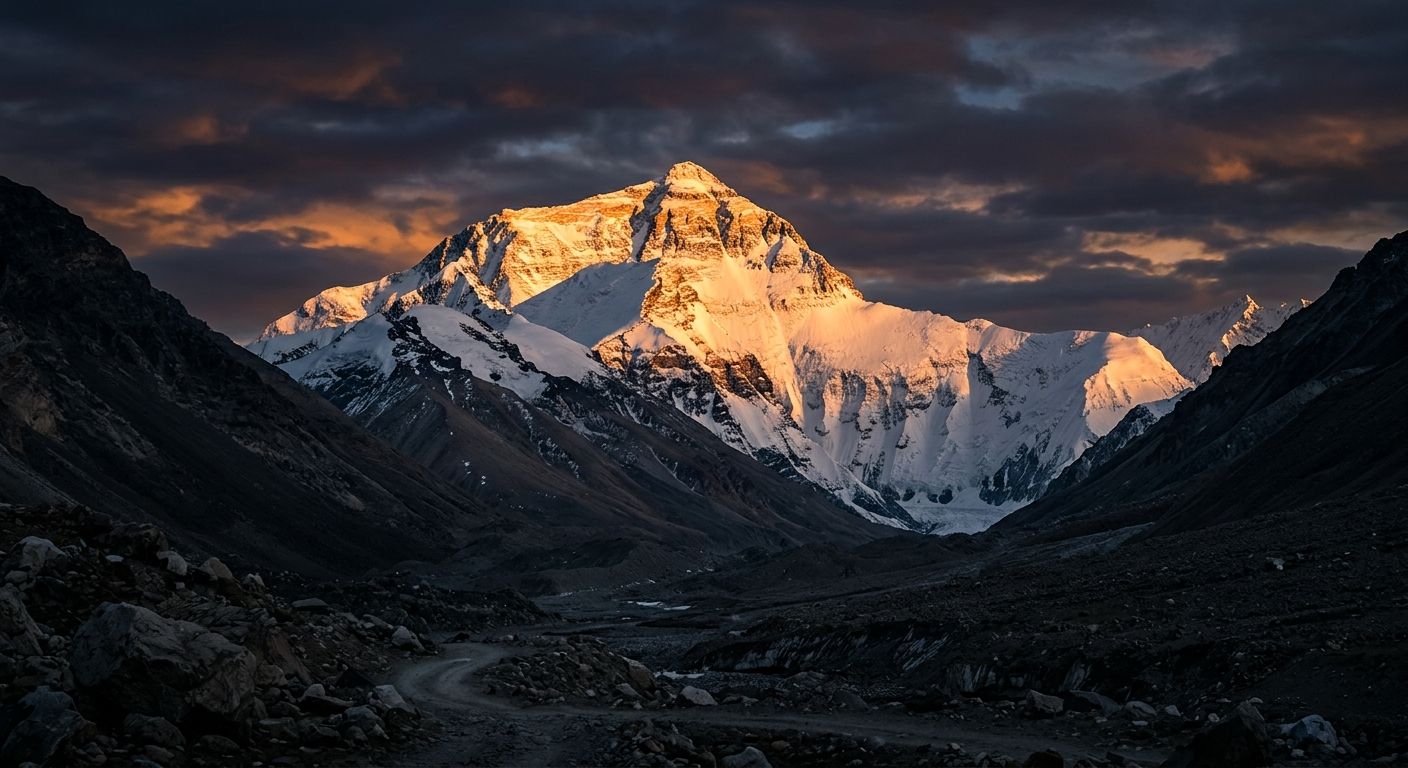
At 5,200 meters, the air contains 53% of the oxygen available at sea level. Your brain, which consumes 20% of your body's oxygen, notices immediately. This is not a metaphor. This is physiology.
The Science of Thin Air
When you ascend to Everest Base Camp from the north — our route through Tibet — your body initiates a cascade of adaptive responses. Red blood cell production increases. Breathing deepens. Heart rate elevates. These are not signs of failure. They are signs of a biological system operating at its design limits.
For executives accustomed to optimizing systems, this is an unusual experience: being the system that needs optimization.
Our Protocol
The Tibet Reserve doesn't treat altitude as a challenge to be conquered. We treat it as a variable to be managed. Our approach:
Days 1-2 (Lhasa, 3,650m): Enforced slow acclimatization in oxygen-enriched suites at the St. Regis. No rushing. No packed itineraries. Your physiology sets the pace.
Day 3-4 (Lhasa to Yamdrok, 3,650-4,441m): Gradual ascent with continuous monitoring. Blood oxygen and heart rate checked twice daily — non-invasively, by your guide, not a nurse with a clipboard.
Day 5 (Everest Base Camp, 5,200m): The summit of the journey. Twin 40-litre medical-grade oxygen cylinders in every vehicle. Clinical delivery masks, not the portable cans you find in tourist shops. If your SpO2 drops below 85%, we intervene.
What We've Learned
In four years of operations, we've never had a guest require emergency evacuation. Not because our guests are exceptionally fit — many are desk-bound executives in their 50s and 60s. But because we respect the mountain's terms.
The executives who do best at altitude share a common trait: they're willing to slow down. The ones who struggle are invariably the ones who treat the ascent like a quarterly target — something to push through rather than adapt to.
There's a lesson in that, and it's not about mountaineering.