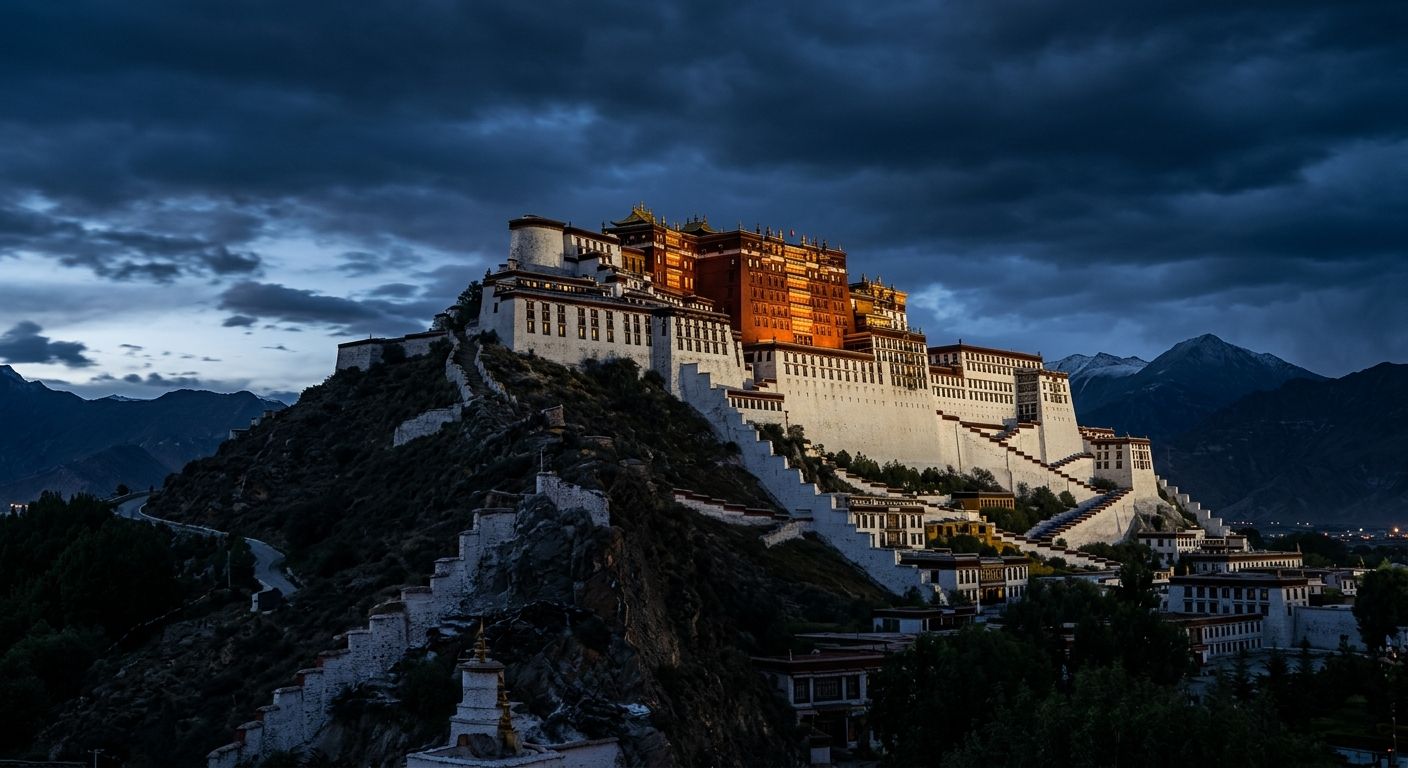
"When should I go?" is the second most common question in our consultations, right after "Is this safe for me?"
The unhelpful answer is that every season offers something specific. The more useful answer requires understanding what you actually want from the expedition — because the Tibet you will experience in late April is genuinely a different Tibet than the one you would experience in mid-October.
The Operating Window
We run departures from April through November. We do not operate December, January, February, or March.
The reasons are practical. Winter temperatures at Everest Base Camp reach -35°C with wind chill. The Friendship Highway between Shigatse and Rongbuk is occasionally impassable due to snow drift. Permit processing slows to a crawl during the first-quarter political calendar. And frankly, no amount of luxury infrastructure can make -35°C feel comfortable — it would be suffering disguised as an expedition, and that is not our product.
April — The First Window
Daytime highs in Lhasa reach 12-16°C. Nighttime lows drop below freezing at higher altitudes. Tashidelek, the first buds appear on the willows along the Lhasa River. The plateau is still largely brown, but the quality of light begins to shift from winter's slate-grey flatness to spring's sharper blues.
Everest visibility in April averages 90%+ — the best of any month. The air is dry, the sky is clear, and the peak's vertical mass is unobstructed by cloud cover on most days.
This is the month for guests who want the mountain above all else. If your primary goal is to stand at Rongbuk and see Everest in its full form, April is the best choice.
The tradeoff: the plateau color palette is restrained. Lakes have not fully thawed. Yamdrok's turquoise saturation peaks later in the season.
May — The Classic Choice
If April is about the mountain, May is about the whole plateau. By mid-May, Yamdrok Lake's glacial melt reaches full flow and the water shifts from winter's muted cyan to the impossible turquoise that photographs never quite capture.
Temperatures warm into the mid-teens during the day. Prayer flag colors feel brighter against the blue sky. Sheep and yak herds return to the high pastures, which changes both the sound and the smell of the plateau.
May is our most heavily booked month. The April-level clarity is still present most days, but the landscape has begun to come alive. If you want a single month that represents the widest spectrum of what Tibet is, May is the answer.
June — The Shoulder
Temperatures continue to warm. The first pre-monsoon clouds begin to appear, which actually improves photography — an entirely clear sky is harder to photograph than one with structured cloud formations. Afternoon storms become more common, but rarely problematic.
June is an excellent month for guests who want warmer weather, slightly fewer other travelers on the Friendship Highway, and the prettiest possible version of the plateau without the monsoon risk of midsummer.
July and August — The Monsoon Risk
We operate one departure in each of these months, specifically for experienced altitude travelers who understand what they are signing up for.
The Indian monsoon pushes moisture over the Himalayas during these months. Everest visibility can drop to 40% or less. Afternoon thunderstorms are regular. The road to Rongbuk is occasionally delayed by washouts.
Why do we operate these months at all? Because when the monsoon breaks — which it does, for hours or days — the plateau is spectacular. The clouds produce dramatic light. The air is cleaner than it has been all year. And the guests who hit a clear window at EBC describe it as otherworldly, with the freshly-rinsed peaks emerging from cloud like something out of a fever dream.
This is not a month for guarantees. It is a month for travelers who appreciate the drama of uncertainty.
Every month produces a different Tibet. None is the wrong Tibet. The question is which Tibet matches what you are looking for.
September — The Autumn Peak
Post-monsoon clarity returns rapidly. By mid-September, Everest visibility recovers to around 85%. Temperatures cool into the low teens during the day.
September also brings the annual Shoton Festival in Lhasa — a thangka-unveiling ceremony at Drepung Monastery that ranks among the most significant Tibetan religious events of the year. Our early September departures can include private access to festival observation if booked in advance.
The landscape shifts. Autumn light warms the stone of the monasteries. Barley fields below Gyantse turn gold before harvest. The yak herds thicken with winter coats.
October — Our Personal Favorite
If May is the classic choice, October is the connoisseur's. The post-monsoon air is at its cleanest of the year. The first dusting of snow appears on surrounding peaks in the second week, while the plateau itself remains dry and navigable.
Everest's north face in October, dusted in fresh snow while the plateau foreground stays amber and brown, produces the most cinematic photographs of the year. Several of our guests' most widely-shared images were captured in the third week of October.
The tradeoff: nighttime temperatures drop sharply. Sleeping at Tingri (4,300m) in late October feels genuinely cold. Our accommodations are heated, but guests should expect to layer more than they would in May.
November — The Late Season
Our final departures run in early-to-mid November. Temperatures approach winter levels. The landscape feels settled, pre-hibernal, and almost entirely empty of other travelers.
This is the month for guests who prize solitude above all else. You will likely be the only visitors at Rongbuk on the day of your arrival. The permit offices are less crowded. Lhasa traffic thins.
The tradeoff: colder weather, shorter daylight, and an occasional early snowstorm that can reshape the itinerary. We are honest about this during consultations.
The Shortest Possible Advice
If this is your first Tibet expedition and you want the most classic experience: **May**. If you care most about seeing Everest clearly: **April**. If you want autumn light and dramatic landscape: **October**. If you want the fewest other travelers and are willing to layer: **November**. If you are experienced with altitude and willing to risk weather for exceptional photography: **August**.
Any other question about timing, we are happy to answer during the consultation.