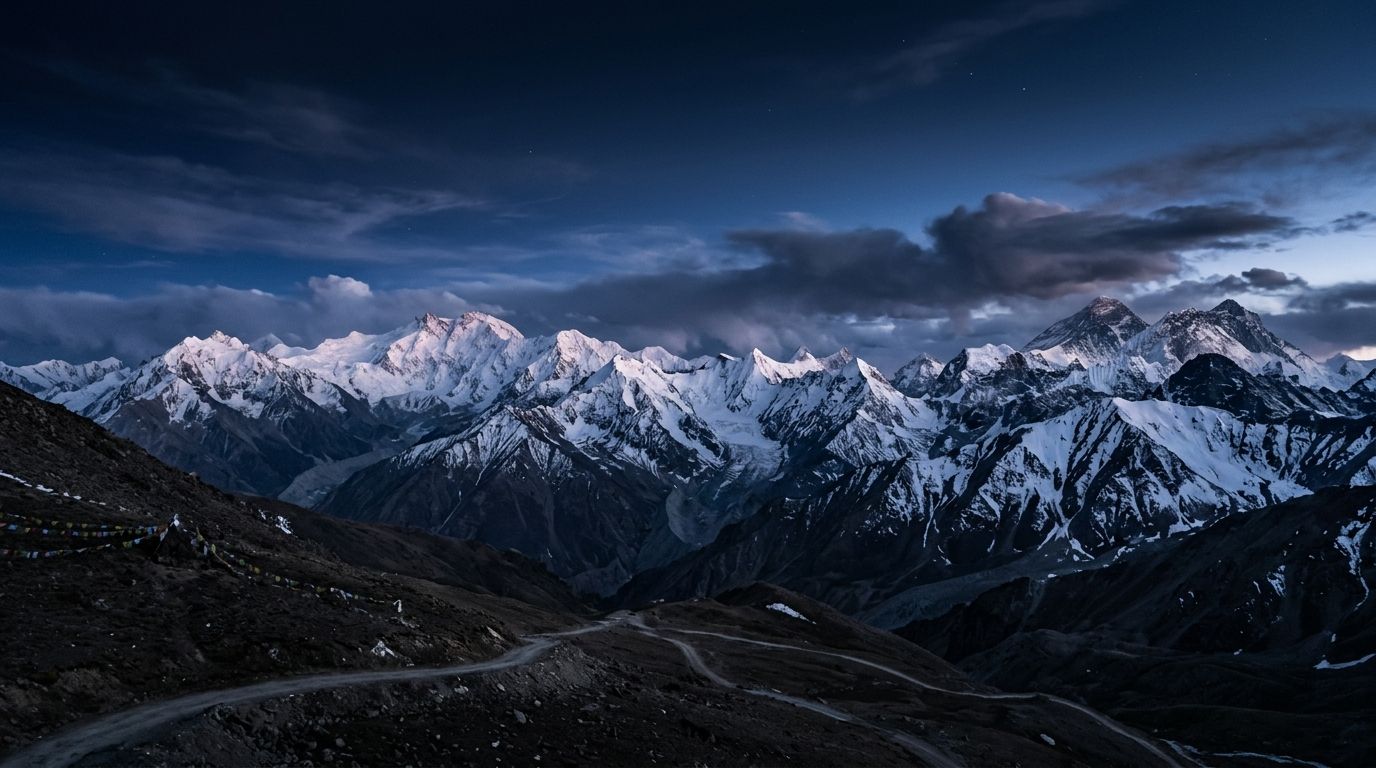
In an era where every luxury destination has been catalogued, reviewed, and Instagram-filtered into sameness, Tibet remains stubbornly, magnificently untouched. This isn't an oversight. It's a feature.
The Tibetan Plateau sits at an average elevation of 4,500 meters — higher than most commercial aircraft cabins are pressurized. It is, quite literally, a different atmosphere. And that altitude acts as a natural filter. There are no cruise ships docking at Yamdrok Lake. No resort chains competing for beachfront. No influencers staging golden-hour content at Everest Base Camp.
The Infrastructure Problem That Became an Advantage
Tibet's remoteness has historically been framed as a limitation. Poor roads, limited hotels, unreliable connectivity. For mass tourism, these are dealbreakers. For the discerning executive who has already exhausted the Maldives, Patagonia, and the Norwegian fjords, they are precisely the point.
The Tibet Reserve was built on a contrarian thesis: that the world's most successful people don't want another five-star resort with a predictable infinity pool. They want to stand somewhere that challenges their internal model of what's possible.
The Psychological Return on Investment
We've observed something consistent across our guests — overwhelmingly C-suite executives, founders, and family office principals. The first two days in Tibet produce visible discomfort. Not from altitude (we manage that clinically), but from the absence of stimulation.
No notifications. No deal flow. No ambient noise of consequence.
By Day 3, something shifts. The executives who spend their lives making decisions at velocity begin to process at a different frequency. The Potala Palace doesn't care about your quarterly earnings. Yamdrok Lake doesn't respond to urgency. Everest has been standing there for 60 million years.
This isn't mindfulness tourism. It's a forced recalibration.
Why Now
Tibet's window of accessibility is narrowing. Infrastructure is improving — which sounds positive until you realize that improved infrastructure means more visitors, more development, and the gradual erosion of the very qualities that make the region extraordinary.
The Tibet Reserve exists in a specific temporal window: after the roads became reliable enough for comfort, but before the destination becomes another item on every luxury travel agency's menu.
If you're reading this in 2026, that window is still open. Barely.